Alison Byrne Fields hatte in den 80er Jahren einen Brieffreund namens John Hughes. Vor kurzem hat sie die Geschichte dazu aufgeschrieben und shit, ist die Luftfeuchtigkeit so hoch oder musste ich mir doch tatsächlich gerade eine Träne wegdrücken…? RIP, John.
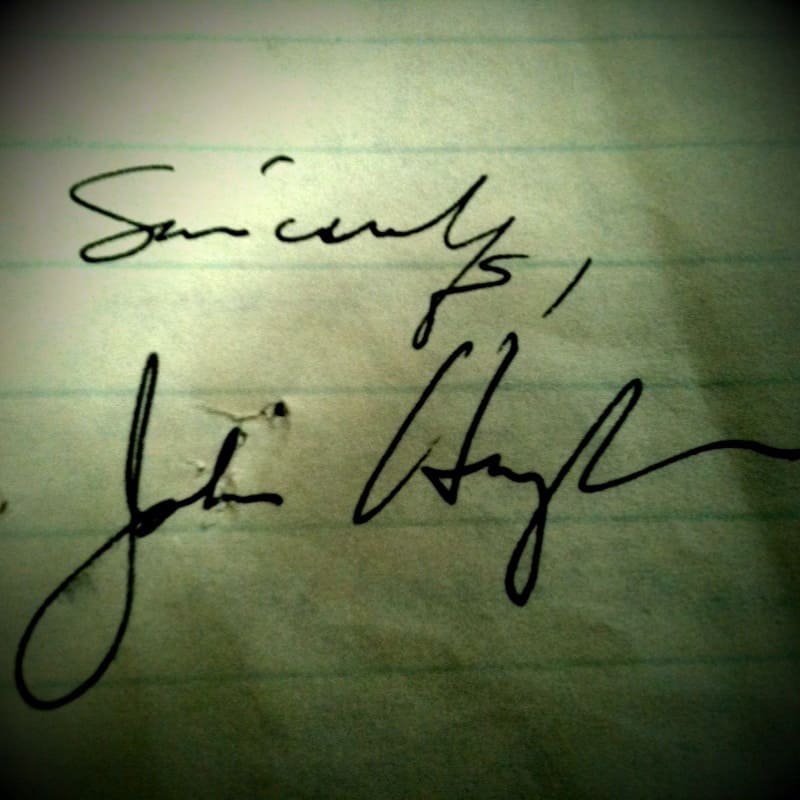
For two years (1985-1987), John Hughes and I wrote letters back and forth. He told me – in long hand black felt tip pen on yellow legal paper – about life on a film set and about his family. I told him about boys, my relationship with my parents and things that happened to me in school. He laughed at my teenage slang and shared the 129 question Breakfast Club trivia test I wrote (with the help of my sister) with the cast, Ned Tanen (the film’s producer) and DeDe Allen (the editor). He cheered me on when I found a way around the school administration’s refusal to publish a «controversial» article I wrote for the school paper. And he consoled me when I complained that Mrs. Garstka didn’t appreciate my writing.
«As for your English teacher…Do you like the way you write? Please yourself. I’m rather fond of writing. I actually regard it as fun. Do it frequently and see if you can’t find the fun in it that I do.»
He made me feel like what I said mattered.
«I can’t tell you how much I like your comments about my movies. Nor can I tell you how helpful they are to me for future projects. I listen. Not to Hollywood. I listen to you. I make these movies for you. Really. No lie. There’s a difference I think you understand.» […]
Fast forward.
1997. I was working in North Carolina on a diversity education project that partnered with colleges and universities around the country to implement a curriculum that used video production as an experiential education tool. On a whim, I sent John a video about the work we were doing. I was proud of it and, all these years later, I wanted him to be proud too.
Late one night I was in the office, scheduled to do an interview with a job candidate. Ten minutes or so into the call it was clear that he wasn’t the right guy, but I planned to suffer through.
Then the phone rang.
1…2…3…4…a scream came from the other room and 1…2…3…my boss Tony was standing in my doorway yelling, «John Hughes is on the phone!!»[…]
We talked for an hour. It was the most wonderful phone call. It was the saddest phone call. It was a phone call I will never forget.
John told me about why he left Hollywood just a few years earlier. He was terrified of the impact it was having on his sons; he was scared it was going to cause them to lose perspective on what was important and what happiness meant. And he told me a sad story about how, a big reason behind his decision to give it all up was that «they» (Hollywood) had «killed» his friend, John Candy, by greedily working him too hard.
He also told me he was glad I had gotten in touch and that he was proud of me for what I was doing with my life. He told me, again, how important my letters had been to him all those years ago, how he often used the argument «I’m doing this for Alison» to justify decisions in meetings.
Tonight, when I heard the news that John had died, I cried. I cried hard. (And I’m crying again.) I cried for a man who loved his friends, who loved his family, who loved to write and for a man who took the time to make a little girl believe that, if she had something to say, someone would listen.
Thank you, John Hughes. I love you for what you did to make me who I am.
Mehr für dich:





 «Dravens Tales from the Crypt» bezaubert seit über 15 Jahren mit einer geschmacklosen Mischung aus Humor, seriösem Journalismus – aus aktuellem Anlass und unausgewogener Berichterstattung der Presse Politik – und Zombies, garniert mit jeder Menge Kunst, Entertainment und Punkrock. Draven hat aus seinem Hobby eine beliebte Marke gemacht, welche sich nicht einordnen lässt.
Mein Blog war niemals darauf ausgelegt Nachrichten zu verbreiten, geschweige denn politisch zu werden, doch mit dem aktuellen Zeitgeschehen kann ich einfach nicht anders, als Informationen, welche sonst auf allen anderen Kanälen zensiert werden, hier festzuhalten. Mir ist dabei bewusst, dass die Seite mit dem Design auf viele diesbezüglich nicht «seriös» wirkt, ich werde dies aber nicht ändern, um den «Mainstream» zu gefallen. Wer offen ist, für nicht staatskonforme Informationen, sieht den Inhalt und nicht die Verpackung. Ich habe die letzten 2 Jahre genügend versucht, Menschen mit Informationen zu versorgen, dabei jedoch schnell bemerkt, dass es niemals darauf ankommt, wie diese «verpackt» sind, sondern was das Gegenüber für eine Einstellung dazu pflegt. Ich will niemandem Honig ums Maul schmieren, um auf irgendwelche Weise Erwartungen zu erfüllen, daher werde ich dieses Design beibehalten, denn irgendwann werde ich diese politischen Statements hoffentlich auch wieder sein lassen können, denn es ist nicht mein Ziel, ewig so weiterzumachen  Ich überlasse es jedem selbst, wie er damit umgeht. Gerne dürfen die Inhalte aber auch einfach kopiert und weiterverbreitet werden, mein Blog stand schon immer unter der WTFPL-Lizenz.
Es fällt mir schwer zu beschreiben, was ich hier eigentlich tue, DravensTales wurde im Laufe der Jahre Kulturblog, Musikblog, Schockblog, Techblog, Horrorblog, Funblog, ein Blog über Netzfundstücke, über Internet-Skurrilitäten, Trashblog, Kunstblog, Durchlauferhitzer, Zeitgeist-Blog, Schrottblog und Wundertütenblog genannt. Was alles etwas stimmt… – und doch nicht. Der Schwerpunkt des Blogs ist zeitgenössische Kunst, im weitesten Sinne des Wortes.
Um den Betrieb der Seite zu gewährleisten könnt ihr gerne eine Spende per Kreditkarte, Paypal, Google Pay, Apple Pay oder Lastschriftverfahren/Bankkonto zukommen lassen. Vielen Dank an alle Leser und Unterstützer dieses Blogs!